
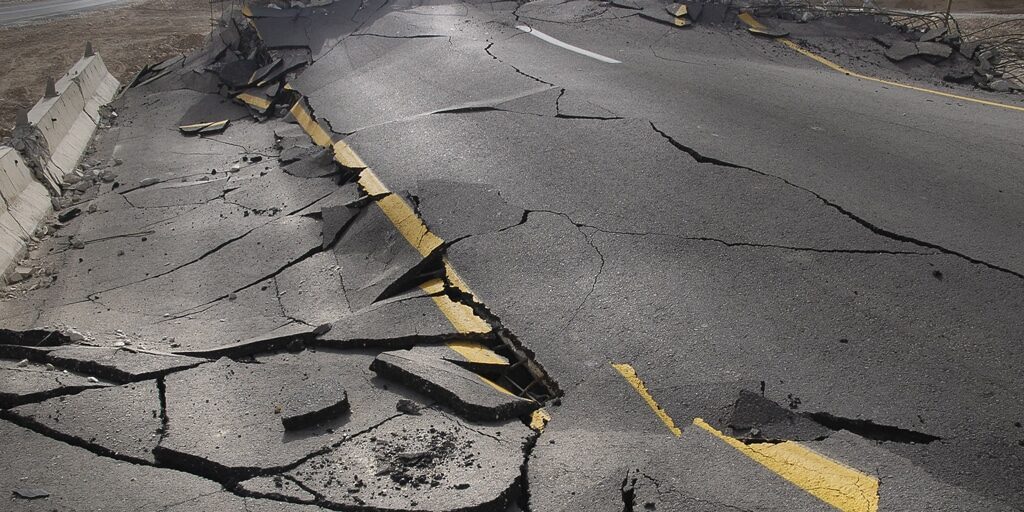
As Oakridge undergoes its historic transformation into Oakridge Park—Canada’s largest master-planned community—this long-standing Vancouver neighbourhood is rapidly becoming one of the most vibrant, high-density urban hubs in the country. Whether you are settling into one of the area’s brand-new residential towers, managing an established property nearby, or owning real estate across the Lower Mainland, understanding how your insurance responds to seismic events is a critical part of protecting your long-term equity. Stratis Insurance is proud to serve this growing community directly from our local office at 5898 Cambie Street, located right across from Oakridge Park. Supported by Rand & Fowler’s trusted B.C. service history dating back to 1882, our advisors deliver clear, educational guidance across all your personal property coverage needs.
Understanding seismic property coverage in British Columbia requires examining how insurance underwriters evaluate the Pacific Northwest’s unique geological risks. Securing real estate demands a proactive financial strategy long before shaking occurs. If you are reviewing earthquake insurance in BC, evaluating percentage-based deductibles, strata special assessment liabilities, and standalone buy-down protection is the most critical step in your property management plan.
How Earthquake Insurance Works in British Columbia
Standard residential insurance policies throughout B.C.—including home insurance, condo insurance, and tenant insurance coverage—explicitly exclude shaking damage, earth movement, and landslides. Establishing protection against seismic events requires adding a specialized endorsement or securing a standalone policy.
Seismic Protection Layers
- Layer 1: Base Policy Earthquake Endorsement — Replaces the physical structure, personal belongings, and provides Additional Living Expenses (ALE).
- Layer 2: Earthquake Deductible Buy-Down (EQDB) — Absorbs high primary percentage deductibles, lowering out-of-pocket costs to fixed thresholds.
- Layer 3: Strata Earthquake Assessment Coverage (EQST) — Protects individual condo owners when a strata board assesses a building master policy deductible.
The Mechanics of Percentage-Based Deductibles
Unlike standard $500 or $1,000 property deductibles that apply per incident, seismic deductibles in British Columbia are calculated as a percentage of the property’s total replacement value. Underwriters set these percentages—routinely 5%, 10%, 15%, or 25%—based on regional seismic mapping, soil liquefaction factors (such as river silt in Richmond or Delta), structural design, and building age.
The percentage applies to the total insured rebuild value of the home, not the cost of the physical damage sustained:
- Percentage Deductible Math: If a single-family house carries a $1,200,000 building replacement cost limit and the policy contains a 10% earthquake deductible, the policyholder must pay $120,000 out of pocket before the primary insurance policy begins paying claims. If the policy carries a 15% deductible, that initial out-of-pocket responsibility increases to $180,000.
B.C. Disaster Financial Assistance (DFA) Exclusions
A widespread misconception among B.C. property owners is assuming government emergency funds will rebuild damaged private property after a major tremor. Under B.C. Government Disaster Financial Assistance (DFA) guidelines, disaster relief explicitly denies claims for earthquake damage because private earthquake insurance is accessible in the commercial market. Without active private insurance, property owners are fully responsible for their structural restoration expenses.
The 3-Layer Earthquake Protection Framework
Establishing resilient financial protection against Cascadia Subduction Zone hazards involves structuring three distinct policy layers:
1. Base Policy Earthquake Endorsement
Attached to a primary home insurance or condo insurance policy, this core endorsement pays to rebuild the primary dwelling, replace personal belongings, and cover Additional Living Expenses (ALE) if a home becomes uninhabitable during reconstruction. Under the industry-standard 72-Hour Event Clause, all shaking damage and aftershocks occurring within a continuous 72-hour window are grouped as a single claim under one deductible.
2. Earthquake Deductible Buy-Down (EQDB)
Because primary percentage deductibles ($100,000+) present a massive capital hurdle for most households, Stratis advisors place specialized Earthquake Deductible Buy-Down (EQDB) policies. Issued through standalone private markets, an EQDB policy sits above primary coverage and absorbs the primary percentage deductible, capping the property owner’s effective out-of-pocket responsibility at a manageable fixed amount (such as $2,500 or $5,000).
3. Strata Earthquake Assessment Coverage
Condominium and townhome owners face dual financial risk under B.C.’s Strata Property Act. If an earthquake damages shared structural elements (such as parkades, exterior walls, or mechanical systems), the Strata Corporation’s master policy responds. However, the strata board will levy the building’s master earthquake deductible across all unit owners as a special assessment. Strata Loss Assessment endorsements insulate individual owners when hit with five- or six-figure deductible charge-backs.
Seismic Coverage Comparison Matrix
| Policy Layer | Coverage Scope | Deductible Structure | Target Application |
| Base Policy Endorsement | Structural rebuild, contents replacement, temporary relocation ALE. | High percentage-based threshold (5%–25% of total rebuild value). | Primary homeowners, townhome owners, and condo unit owners across B.C. |
| Deductible Buy-Down (EQDB) | Pays the primary insurer’s high percentage deductible during an active claim. | Caps personal out-of-pocket expense to a fixed $2,500–$5,000 threshold. | Homeowners seeking to eliminate six-figure out-of-pocket primary deductibles. |
| Strata Assessment (EQST) | Reimburses special assessments levied by strata councils for master deductibles. | Aligns with the strata building’s master earthquake deductible ($100k–$250k+). | Condo and townhome owners governed by a B.C. Strata Corporation. |
Real Local Claims Scenario: Kitsilano Condo Unit Owner
When a condo owner in Vancouver’s Kitsilano neighbourhood reviewed their annual strata renewal documents, the building’s master earthquake deductible had increased to 15%—exposing each unit owner to a potential $85,000 special assessment following a major tremor.
Working with their Stratis Insurance advisor, the owner added a targeted Strata Earthquake Assessment & Buy-Down rider to their personal condo insurance policy. When minor seismic activity caused structural parkade cracking that triggered a building assessment, the owner’s personal endorsement covered the $85,000 levy, capping their personal out-of-pocket loss at $2,500.
Key Factors Influencing B.C. Seismic Underwriting
Insurance companies evaluate detailed structural and geographical variables when pricing seismic endorsements and establishing buy-down eligibility:
- Geographical Risk Mapping: Proximity to active seismic faults across Metro Vancouver, Vancouver Island, the Sunshine Coast, and the Okanagan (referencing parameters like Natural Resources Canada Seismic Hazard Maps).
- Soil Liquefaction Exposure: Properties constructed on soft river silt or filled ground (such as Richmond, Delta, or riverfront areas) carry higher risk ratings.
- Building Design & Age: Wood-frame structures offer structural flexibility during shaking, whereas older unreinforced masonry or un-retrofitted concrete buildings carry stricter deductible requirements.
- Replacement Cost Calculations: Calculating true physical reconstruction expenses—completely independent of land market value—ensures accurate baseline policy limits.
The Stratis Educational Approach: Independent BC Broker Advocacy
Navigating B.C. seismic protection requires an independent advocate who evaluates multiple insurance markets on your behalf.
- Stage 01: Exposure Audit — Reviews property postal code, soil parameters, and building construction type to establish true rebuilding values and identify exact deductible exposure.
- Stage 02: Multi-Market Review — Scans private insurance markets for standalone Deductible Buy-Down policies to secure buy-down options when primary insurers restrict percentage choices.
- Stage 03: Strata Policy Review — Audits your strata corporation’s Form B and master insurance cover note to match personal assessment limits to your building’s actual master deductible.
- Stage 04: Claims Representation — Provides direct advisory support during property claims and ALE management from licensed B.C. brokers dedicated to your security.
Complete Protection Across Every Stage of Life
Securing your home against seismic hazards is one component of a complete financial protection strategy. At Stratis Insurance, we provide educational, human-centered guidance across our full suite of services:
- Home Insurance: Comprehensive dwelling, liability, and coastal water protection for single-family residences.
- Condo Insurance: Specialized coverage for unit betterments, contents, and strata loss assessment sub-limits.
- Tenant Insurance: Essential contents and personal liability protection for renters across British Columbia.
- Business Insurance: Commercial general liability, property, and equipment breakdown solutions for local businesses.
- Life Insurance: Preserve your family’s financial legacy and structure estate equality plans.
- Travel Insurance: Emergency medical protection whenever you travel outside B.C. or internationally.
- Auto Insurance: Mandatory ICBC Autoplan renewals paired with extended private optional coverage.
Explore expert property guides and regional risk management insights on our Resources hub.
Partner with Stratis Insurance Today
Protecting your home begins with an educated perspective. Whether you are reviewing your primary home policy, auditing your strata building’s master deductibles, or exploring Earthquake Deductible Buy-Down options in Oakridge and across B.C., Stratis Insurance is dedicated to serving as your proud protector and guide.
Contact a Licensed Stratis Insurance Advisor Today or visit our office at 5898 Cambie Street, Vancouver, BC (right across from Oakridge Park) to receive a personalized earthquake coverage review!
For official seismic hazard parameters, disaster assistance policies, and emergency preparedness guidelines, consult Natural Resources Canada (Seismic Hazard Maps), the B.C. Government Disaster Financial Assistance (DFA), or the Insurance Bureau of Canada (IBC Pacific).
Frequently Asked Questions About B.C. Earthquake Insurance
Is earthquake insurance automatically included in B.C. home policies?
No. Standard residential property policies in British Columbia explicitly exclude earth movement and seismic damage. Protection must be added as an optional policy endorsement or standalone policy.
How is a B.C. earthquake deductible calculated?
Unlike fixed dollar deductibles, seismic deductibles are calculated as a percentage (typically 5% to 25%) of your total building replacement value limit. A 10% deductible on a $1,000,000 building limit creates a $100,000 out-of-pocket requirement before primary coverage pays.
What is an earthquake deductible buy-down policy?
An Earthquake Deductible Buy-Down (EQDB) is a specialized policy that sits above your primary insurance. It absorbs the primary percentage deductible during a loss, capping your personal out-of-pocket expense at a fixed amount, such as $2,500 or $5,000.
How does earthquake coverage work for condo owners in B.C.?
If an earthquake damages common building elements, the strata board applies its master policy and assesses the resulting percentage deductible across all unit owners. Carrying Strata Earthquake Assessment protection on your personal condo insurance policy covers these special levies.
Does B.C. Disaster Financial Assistance (DFA) cover earthquake losses?
No. B.C.’s DFA program explicitly denies financial assistance for earthquake damage because private insurance is available in the marketplace. Uninsured property owners bear full financial responsibility for rebuilding costs.
Like the article? Share it with your friends!