

Uber Driver Insurance in Vancouver
Driving for rideshare platforms like Uber offers flexible earning opportunities across Vancouver, the Lower Mainland, and major transportation corridors like Vancouver International Airport (YVR). However, using your personal vehicle to transport passengers or deliver goods fundamentally alters your legal and insurance responsibilities under British Columbia law.
In BC, ride-hailing falls under the regulation of Transport Network Services (TNS) and the Passenger Transportation Board (PTB). While Uber maintains a commercial blanket insurance policy through ICBC during active rides, relying solely on app-provided coverage can leave drivers exposed to significant out-of-pocket risks, such as a $2,500 commercial collision deductible, or potential coverage invalidation if personal policies are not declared correctly.

How Does Uber Driver Car Insurance Work in BC?
Rideshare insurance in British Columbia is divided into three distinct operational stages. Understanding which policy is active during each period is essential for avoiding unexpected coverage gaps and managing your personal financial risk:
-
Period 1
Offline (Personal Vehicle Use)
- Operational Status:
- The Uber driver app is completely turned off, and you are operating your vehicle solely for personal use.
- Active Coverage:
- Your standard personal ICBC Autoplan basic insurance and private optional policies apply 100%.
- App Blanket Status:
- Uber’s commercial blanket policy is completely inactive during this period.
-
Period 2
App-On / Waiting for a Request
- Operational Status:
- You are logged into the Uber app and waiting on standby for a ride request or delivery alert.
- Active Coverage:
- Your personal insurance policy remains the primary coverage, backed by contingent commercial blanket liability protection.
- App Blanket Status:
- Secondary commercial coverage activates to provide liability backup if an incident exceeds personal policy limits.
-
Period 3
Trip Accepted / Transporting Passengers
- Operational Status:
- You accept a fare request and are en-route to pick up a passenger, or you are actively transporting passengers to their destination.
- Active Coverage:
- Uber’s mandatory ICBC commercial blanket policy becomes primary.
- Protection Limits & Deductibles:
- The blanket policy provides $2,000,000 in Third-Party Liability protection and mandatory Enhanced Care accident benefits. However, physical damage repairs to your vehicle under the blanket policy carry a standard $2,500 commercial deductible.
Stage-by-Stage Rideshare Coverage Breakdown
The following breakdown illustrates how insurance protection shifts dynamically across driving stages in British Columbia:
Driving Stage
Operational Status
Primary Insurer
Third-Party Liability Limits
Physical Damage Deductible
Period 1
App Offline (Personal Use)
Personal Policy (ICBC + Private)
Standard Personal Limits ($200K-$5M)
Personal Deductible ($300-$1,000)
Period 2
App On / Waiting for Request
Personal Policy + Contingent Commercial
Personal Limits + Commercial Backup
Personal / Contingent Terms
Period 3
Fare Accepted / Transporting Passengers
Uber ICBC Commercial Blanket Policy
$2,000,000 Blanket Commercial Limit
$2,500 Commercial Deductible
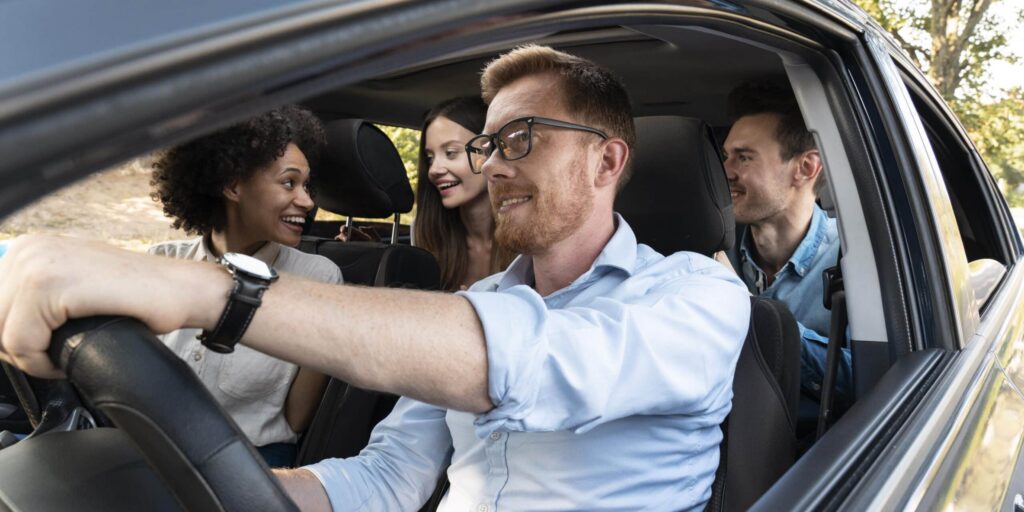
ICBC Ride-Hailing Rules: What Every Driver Must Declare
A common myth among gig-economy drivers is that Uber’s blanket policy replaces the need to inform ICBC about commercial driving activities. Under Section 75 of BC’s Insurance (Vehicle) Act, failing to declare commercial ride-hailing usage to your Autoplan broker constitutes an insurance breach, which can render your personal policy void during a claim.
Mandatory ICBC Rate Class Declarations
When registering your vehicle for ride-hailing or food delivery, you must declare your usage frequency to your broker:
- Up to 6 Days per Month: Drivers who conduct ride-hailing or delivery services for 6 days or fewer in a calendar month must notify their Autoplan broker so appropriate usage notes are recorded on their file.
- Over 6 Days per Month: Drivers who operate for 7 or more days per calendar month must re-class their vehicle under the designated Transport Network Service (TNS) rate category.
Class 4 Commercial Licensing Requirements
Under regulations established by the Passenger Transportation Board (PTB) and ICBC, all ride-hailing drivers in British Columbia carrying passengers for compensation must hold a valid Class 1, 2, or Class 4 Restricted commercial driver’s license.
To obtain a Class 4 Restricted commercial license in BC, drivers must meet the following criteria:
- Be at least 19 years of age.
- Hold a full-privilege Class 5 driver’s license with a minimum of two years of non-learner driving experience.
- Maintain a commercial driving record with fewer than four penalty point incidents in the past two years and no driving-related criminal convictions in the past three years.
- Pass an ICBC commercial knowledge test, vision screening, Class 4 road test (including a pre-trip vehicle inspection), and a driver medical examination.
Closing the $2,500 Deductible Gap & Managing Edge Cases
While Uber’s commercial policy satisfies basic provincial liability requirements during active trips, the $2,500 commercial collision and comprehensive deductible presents significant financial exposure for drivers during an at-fault crash or hit-and-run incident.
Real Client Scenario: Managing Rideshare Deductible Exposure
Consider a real-world scenario from the Lower Mainland: A driver commuting along Kingsway in Vancouver accepted a fare request and was en-route to pick up a passenger when another vehicle turned abruptly, resulting in a collision. Because the trip was active (Period 3), Uber’s commercial policy covered third-party property damage and provided medical care through Enhanced Care. However, repairing the driver’s own vehicle required paying a steep $2,500 commercial deductible.
Because the driver had reviewed their policy with Stratis prior to starting with Uber, they had structured private optional collision protection that matched their personal lower deductible threshold ($500), effectively bridging the financial gap and absorbing the out-of-pocket difference.
Addressing Complex Rideshare Edge Cases
Working with an independent broker helps resolve complex operational edge cases that standard automated forms miss:
- Dual-App Usage (Uber + Lyft Simultaneously): If you keep both the Uber and Lyft apps active while waiting for a fare in Period 2, both commercial blanket policies act as contingent backup. However, you must ensure your underlying personal ICBC policy permits multi-platform TNS activity.
- Transitioning to Food Delivery (Uber Eats): Delivering food or parcels differs legally from passenger ride-hailing. While passenger transport requires a Class 4 commercial license and TNS rating, delivery driving requires specific delivery usage declarations with ICBC depending on vehicle weight and monthly frequency.
- Cross-Border Driving (US Trips): While Uber’s blanket policy covers passenger transport within BC, dropping off passengers across the US border or operating in foreign jurisdictions requires verifying specialized extended liability limits with your advisor before departure.
Why Work with an Independent Stratis Broker in Oakridge?
Relying on generic app FAQs or automated online forms often leads to unaddressed coverage gaps. Working with an independent broker at Stratis Insurance provides distinct advantages:
Located directly across from Oakridge Park at 5898 Cambie Street in Vancouver, our advisors offer personalized, face-to-face guidance. We evaluate your complete driving profile, handle mandatory ICBC rate-class declarations, and cross-shop private optional insurance carriers to secure deductible top-up endorsements. Furthermore, we help coordinate your entire household insurance portfolio, aligning vehicle policies alongside your Home and Auto Insurance Bundling strategy or exploring Private Auto Insurance Options.
Educational Resource Note: For official details regarding provincial ride-hailing licensing and driver requirements, visit the ICBC Ride-Hailing Guidelines, the Passenger Transportation Board (PTB) BC, and the Uber Canada Driver Help Center.
Edward Chu, is very quick, reliable, and professional! Always on top of everything and reminds me ahead of time about my renewals. Definite…
Read More

K T
Excellent service! Akash was amazing with his knowledge. I am saving 110 per month after switching to private insurance.
Read More
Punith
Peter is great – followed up with me to make sure my renewal happened in time, was very flexible, and super helpful.
Read More
Rachelle
Wasn’t expecting such a great service from them – as I have had bad experience with other agencies. But Nikhil G made sure I was taken care…
Read More
Inderpreet
Daivia was really helpful in renewing my car insurance seamlessly and providing options for travel insurance. Highly recommended!
Read More
Mirka
I had a fantastic experience working with Christy! She was extremely professional, knowledgeable, and helpful throughout the entire process…
Read More
Hadi
Bide Qu customer service is 10/10. He really takes care of you and answers all the questions you have. Totally recommend!
Read More
Tommy
Rick went above and beyond to help me out find me the best deal. Best experience I’ve had renewing my insurance and won’t use anyone else g…
Read More
Matthew
Stella Park is an excellent insurance broker. She is professional, prompt and clear in her communication. Her desire to help is evident and…
Read More
Olga
Jenny was really helpful and kind. I had the best experience with getting the car insurance with her. Highly recommend!!!
Read More
D N
Connor was great. Provided quick information. Got the details quickly and was very helpful and thorough for the auto insurance.
Read More
Winston
Excellent customer service! Shoutout to Connor, who made the insurance process smooth and straightforward. Highly recommend!
Read More
Alex
FAQ
Do I need commercial auto insurance to drive for Uber in Vancouver?
Uber maintains a commercial blanket policy through ICBC that covers Third-Party Liability and Enhanced Care benefits while you are on an active trip. You do not need an individual commercial fleet policy, but you must declare your ride-hailing usage to ICBC through an Autoplan broker to update your personal policy rate class correctly.
What happens if I get into an accident while driving for Uber in BC?
If an accident occurs while the app is off (Period 1), your personal policy handles the claim. If an accident occurs while en-route or carrying a passenger (Period 3), Uber’s ICBC commercial blanket policy provides liability coverage and Enhanced Care medical benefits, subject to a $2,500 physical damage deductible.
Why is the Uber commercial insurance deductible set at $2,500, and how can I reduce it?
The $2,500 deductible is a standardized commercial risk threshold set under Uber’s blanket provincial policy. You can reduce your out-of-pocket exposure by working with an independent broker at Stratis to add private optional endorsement coverage that bridges the deductible gap.
Do I have to tell ICBC that I drive for Uber or Uber Eats?
Yes. You must declare your ride-hailing or delivery frequency (whether up to 6 days per month or over 6 days per month) to your Autoplan broker. Failing to report commercial vehicle use can invalidate your personal insurance policy under Section 75 of BC’s Insurance (Vehicle) Act.
How does an independent broker like Stratis help protect rideshare drivers?
An independent broker ensures your ICBC rate class declarations are accurate, evaluates your coverage across all three driving stages, cross-shops private optional markets to manage high deductibles, and provides personal advocacy during claims.
Can I get a private car insurance quote in Vancouver or Oakridge instead of buying optional ICBC coverage?
Yes. While mandatory Basic Autoplan must be purchased through ICBC, you maintain full freedom to obtain optional collision, comprehensive, and extended liability coverage through private insurance carriers via an independent broker at Stratis.
How does ICBC handle Uber driver claims?
If a claim occurs while offline (Period 1), ICBC processes it under your personal policy. If a claim occurs during an active fare (Period 3), ICBC processes the claim under Uber’s commercial blanket policy for liability and Enhanced Care benefits, subject to Uber’s $2,500 physical damage deductible.
Does my Vancouver car insurance policy cover me when driving into the United States?
Personal BC auto insurance policies generally extend coverage for travel into the United States. However, if you intend to conduct commercial ride-hailing across borders, you must review specific cross-border restrictions and extended liability options with your advisor prior to travel.
What information do I need to prepare to get an accurate quote for rideshare coverage?
To review your rideshare protection, prepare your current ICBC Autoplan registration papers, valid Class 4 driver’s license details, estimated monthly ride-hailing days, and details regarding which apps you operate (e.g., Uber, Lyft, or Uber Eats).

Get Covered Now
Ready for the ultimate protection? Talk to our trusted advisors for personalized plans and peace of mind.

 Renew ICBC


© 2026 Stratis Insurance. All rights reserved.